Question
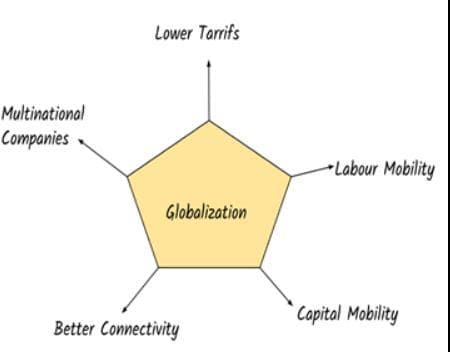
Q3(a). Explain Globalization and its impact on industry in India.
Show AnswerHide Answer
Model Answer
“Globalisation is the integration of nations through flows of goods, ideas, capital, technology and people.” - IMF
Globalisation accelerated in India after the 1991 LPG reforms. The reduction of import barriers, opening to foreign investment, capital market reforms, and integration with global supply chains transformed industrial development.
Impact on Indian Industry
1. Growth of FDI-led Manufacturing
FDI inflows rose dramatically from $132 million in 1991 to $71 billion in 2023. This capital flow transformed sectors such as:
- Automobiles: India became a global hub; Gurugram-Manesar (Haryana) hosts Maruti Suzuki, Honda, and global component suppliers.
- Electronics: Mobile assembly units like Samsung, Oppo expanded under Make in India.
2. Rise of IT–BPO Industry
India emerged as the world’s back-office, with Bengaluru, Hyderabad, Pune, and Gurugram leading. Over 50 lakh professionals work in IT-BPO (NASSCOM 2023). This sector contributes heavily to service exports.
3. Export Competitiveness
Exports of gems and jewellery, engineering goods, chemicals, textiles, and pharma surged due to global market access and quality improvements.
4. Technology Transfer & Modernisation
Globalisation introduced advanced technologies (AI, robotics, ERP systems), raising productivity and efficiency.
- Pharma adopted global FDA standards.
- Auto industry adopted Japanese lean production techniques.
5. Boost to MSMEs with Challenges
MSMEs accessed global markets through e-commerce and export networks. But exposure to foreign competition led to pressure on small units lacking capital and tech.
6. Consumer Revolution
Imported goods, multinational brands, and global retail chains expanded choices in electronics, clothing, FMCG, and automobiles.
Globalisation modernised Indian industry, enhanced competitiveness, and diversified its structure though inclusive benefits require strong social and policy support.