Question
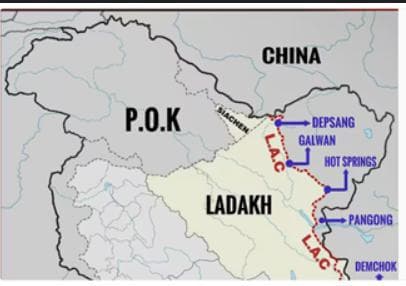
Q17. Critically examine India–China relations in view of the recent Galwan Valley clash.
Show AnswerHide Answer
Model Answer
“Peace with neighbours is essential to India’s development.” - Indian foreign policy mantra
The Galwan Valley clash (June 2020) marked the most serious India–China face-off in decades, causing military casualties and a strategic re-calibration of bilateral ties. The incident exposed layered tensions boundary ambiguity, strategic rivalry, and differing threat perceptions.
Background and Causes
- Border Dispute Legacy: Lack of a settled Line of Actual Control (LAC) and differing perceptions led to periodic stand-offs.
- Infrastructure and Strategic Competition: India’s infrastructure upgrades (roads, bridges, airstrips) in Ladakh and China’s militarization of Tibet increased friction.
- Geopolitical Rivalry: Competition in the Indian Ocean, Belt and Road Initiative (CPEC), and differing alignments (QUAD vs. SCO) exacerbated mistrust.
Impact of Galwan Clash
- Military Buildup: Both sides deployed additional troops and infrastructure; India strengthened forward logistics and bases in Ladakh.
- Strategic Reorientation: India diversified defence procurement, accelerated Aatmanirbhar defence initiatives, and deepened engagement with QUAD partners.
- Economic Measures: India imposed trade restrictions, increased scrutiny on Chinese FDI, and banned numerous Chinese apps tightening economic ties.
- Diplomatic Freeze: High-level visits were curtailed; diplomatic exchanges reduced to military and corps-level talks.
Efforts at De-escalation
- Military Talks & Confidence Building: Corps commander-level and diplomatic talks led to disengagement agreements (2021–2022) at some friction points.
- Border Management Mechanisms: Re-activation of Working Mechanism for Consultation & Coordination (WMCC) and Special Representatives’ dialogues.
Critical Assessment
- Unresolved Boundary: Despite disengagement at some points, the LAC remains disputed with long-term uncertainty.
- Risk of Escalation: Both militaries retain capabilities for limited conventional escalation; lack of a clear peace treaty sustains risk.
- Economic Interdependence vs. Strategic Decoupling: India’s economic measures show a tilt toward strategic autonomy but complete decoupling is impractical given trade linkages.
- Need for Rules of the Road: Absence of clear border management protocols and hotlines prior to 2020 showed a gap; subsequent measures are partial.
Haryana Relevance
Haryana contributes significantly to defence manufacturing and logistics; the state’s defence corridors and training infrastructure support India’s strategic preparedness post-Galwan.
Galwan highlighted a strategic stress test: India–China relations are now marked by competition, cautious engagement, and calibrated deterrence. Durable peace requires diplomatic mechanisms, boundary settlement efforts, confidence building, and managed competition to avoid recurrence of lethal clashes.