Question
Q2(a). Write about economic growth in India after the Post-liberalisation period (since 1991).
Show AnswerHide Answer
Model Answer
“1991 reforms turned India from a closed economy to a confident global player.” - IMF
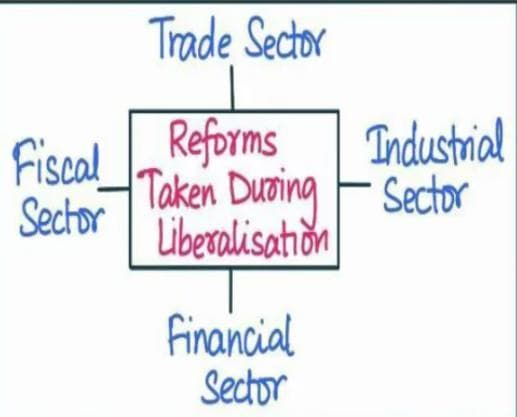
The post-liberalisation era (1991 onwards) marks a structural shift in India’s economic trajectory. Facing a balance-of-payments crisis, India adopted the LPG reforms: Liberalisation, Privatisation, Globalisation, unlocking market forces and reducing state controls.
Key Drivers of Growth After 1991
1. High and Sustained GDP Growth
India’s GDP growth averaged 6–7% between 1991 and 2015, and India emerged as the 4th largest economy (IMF 2025).
2. Rise of Service Sector
IT-BPM, telecom, finance and hospitality expanded rapidly. Services now contribute 54% of GDP, fuelled by skilled labour and global outsourcing.
3. Foreign Investment Boom
FDI inflows rose from $132 million in 1991 to $71 billion in 2023 (DPIIT). SEZs and global supply chains boosted exports.
4. Industrial Modernisation
Automobiles, pharmaceuticals, steel, textiles, and electronics modernised via technology transfer and competition.
5. Financial Sector Reforms
RBI’s autonomy, private banking, capital market reforms (SEBI), and deregulated interest rates deepened financial growth.
6. Poverty Reduction
According to the Global Multidimensional Poverty Index, 415 million Indians exited poverty since 2005–06.
Haryana Experience
Post-1991, Haryana transformed into an industrial-services hub:
- Gurugram became India’s cyber-financial city.
- Auto clusters in Manesar attracted global firms.
- Per-capita income ranks among the highest in India (Haryana Economic Survey 2023).
Post-liberalisation India moved from a controlled economy to a globally integrated, competitive, innovation-driven growth model.