During expiration the air will leave the lungs when the pressure inside the lungs must become
Options
AEqual to the atmospheric pressure
BLower than atmospheric pressure
CHigher than atmospheric pressure
DDiaphragm must contract
Show AnswerHide Answer
Correct Answer
BLower than atmospheric pressure
Model Answer
Official answer key: C. The answer shown above (B) is the academy’s own.
Expiration
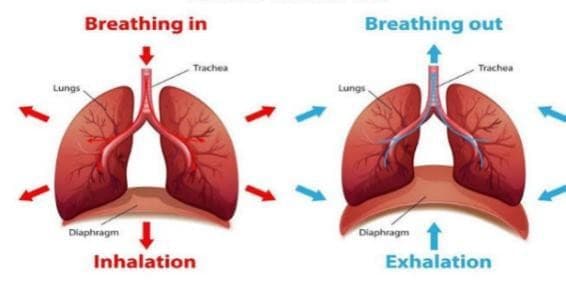
The movement of air from the lungs to the outside is influenced by exhalation.
The process by which carbon dioxide is transported from the lungs' alveoli to the surrounding environment via the alveoli's components is known as expiration.
When the intra-pulmonary pressure is higher than the atmospheric pressure, exhalation occurs.
These gradients are made possible by the diaphragm and a specialized set of muscles between the ribs called the external and internal intercostal muscles.
A healthy person takes in 12 to 16 breaths per minute. A spirometer, which aids in the physical assessment of pulmonary function, can estimate breathing movements.
Additional Information
Inspiration
The process of breathing is involved in inspiration.
Moving air from the environment to the lungs of the human body is the process of inhalation.
In bronchitis, the air travels from the nasal chamber nose to the pharynx before reaching the air pipe. After that, the air reaches the Alveoli, which are tiny sacs of air.
When the pressure within the lungs is lower than the pressure in the surrounding air, inspiration can occur because the alveoli facilitate the flow of oxygen-rich air to the heart.
The body contracts the diaphragm during this inspiration phase, bringing it to the lungs.
The contraction of the diaphragm, which expands the thoracic chamber along the anteroposterior axis, initiates inspiration.
The inspiration occurs when the intra-pulmonary pressure falls below the atmospheric pressure as a result of an increase in pulmonary volume. This forces air from outside the body into the lungs.
Two lung diagrams labelled Breathing in (inhalation) and Breathing out (exhalation) with arrows and the diaphragm marked.