Question
Q3. Explain the important literary contributions of the Gupta Period.
Show AnswerHide Answer
Model Answer
“The Gupta age was the golden age of art and literature in India.” R.C. Majumdar
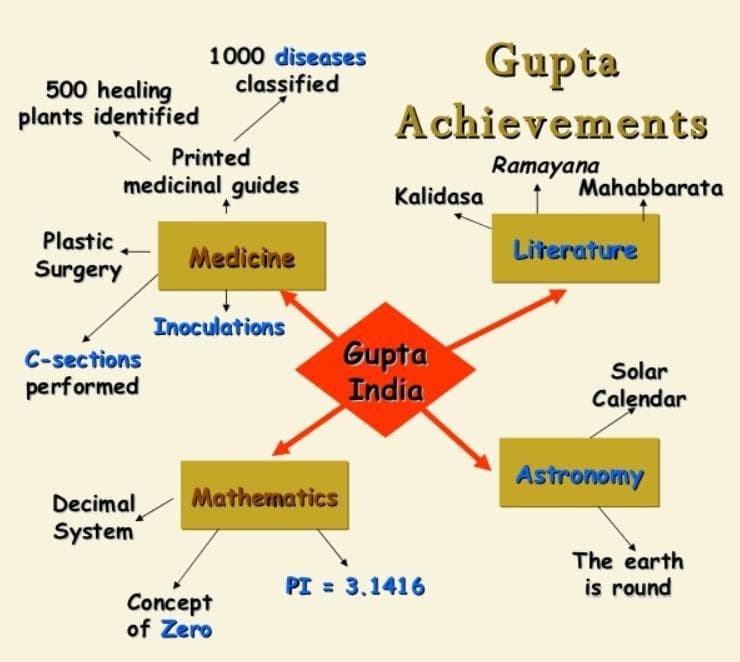
The Gupta period (320–550 CE) marked the zenith of classical Indian civilization, often called the Golden Age. It witnessed the flowering of Sanskrit literature, science, philosophy, and drama. Royal patronage and cultural prosperity gave rise to timeless works in poetry, prose, and philosophy that continue to shape Indian heritage.
Features of Gupta Literature
- Flourished under rulers like Chandragupta II (Vikramaditya) and Samudragupta.
- Sanskrit replaced Prakrit as the court language.
- Literature reflected humanism, aesthetics, and dharma, rather than religious dogma.
Major Literary Works and Authors
Kalidasa – the Shakespeare of India
- Works: Abhijnanasakuntalam, Meghaduta, Raghuvamsha, Kumarasambhavam.
- His writings blended nature, romance, and devotion with refined poetic expression.
- Abhijnanasakuntalam became the first Sanskrit play translated into European languages in the 18th century.
Vishakhadatta
- Mudrarakshasa: political drama depicting Chandragupta Maurya’s rise, showing Gupta mastery of political thought.
Sudraka
- Mricchakatika (The Little Clay Cart): portrays urban life and social classes with realism.
Prose and Scientific Works
- Panchatantra by Vishnusharma: collection of moral tales influencing global fables.
- Aryabhatiya by Aryabhata (499 CE): advanced astronomical and mathematical treatise; proposed Earth’s rotation.
- Amarakosha by Amarasimha: earliest lexicon of Sanskrit terms.
- Charaka Samhita and Sushruta Samhita saw re-compilations during this era, advancing medicine.
Religious and Philosophical Texts
- The Puranas (Vishnu, Bhagavata, Markandeya) and Dharmashastra texts were systematized.
- Buddhist texts like Buddhacharita and Jaina commentaries flourished alongside Hindu literature, showing intellectual tolerance.
Influence on Haryana and North India
- Excavations at Kurukshetra and Thanesar (Haryana) reveal Gupta inscriptions and educational centers.
- Sanskrit schools established in this region promoted learning and religious discourse under Gupta patronage.
- Literary themes from Gupta poetry still influence folk theatre (Nautanki) traditions in North India.
The Gupta period remains a beacon of India’s literary and cultural renaissance. Its writers like Kalidasa and Aryabhata shaped not only India’s intellectual history but world civilization.
From Kurukshetra’s inscriptions to modern classrooms, the Gupta legacy endures as a symbol of India’s pursuit of beauty, reason, and enlightenment.